How a motor actually starts depends on the phase conversion technology behind it. On the same hard-starting load, a Phase Perfect® digital phase converter, a rotary, and a static converter behave very differently — and the oscilloscope makes the difference impossible to miss. This is Phase Perfect® vs other phase conversion solutions.
Simplified Phase Conversion Summaries, for Single Motor Loads
Static Phase Converter
Motors running on a static phase converter start with unbalanced three-phase but run single-phase, with a significant loss in power and efficiency while running.
Rotary Phase Converter
Motors running on a rotary phase converter, unless sized much smaller than the rotary, start largely single-phase (more on that later), but can run three-phase, with three-phase voltage balance dependent on many variables.
Phase Perfect® Converter
Motors running on a Phase Perfect phase converter both start and run three-phase, with excellent three-phase voltage balance.
These Summaries Can Be Demonstrated With a Simple Test
Our test load consisted of a Hoffman Centrifugal Blower driven by a 3500 RPM Continuous Duty 3-phase induction motor. This load has similar startup characteristics to a geared head lathe or dust collector. This load was started with a 10 Horsepower Phase Perfect® Enterprise and a 20 Horsepower name-brand rotary phase converter, both with the same 240 V single-phase supply.
The rotary phase converter manufacturer recommends a 3 Phase Sizing of 25 amps in the fine print but recommends the converter to start hard motor loads such as geared head lathes, dust collectors, or fans up to 10 Horsepower. The 10 Horsepower Phase Perfect can provide 36 amps of steady-state output and is rated to across-the-line start a motor with a nameplate rating up to 10 Horsepower. Both phase converters are marketed and sold as being appropriate for this test load.
During startup, data was collected with an oscilloscope including voltage and current on a pass-through leg as well as the generated leg.
| Pass-Through Leg | Phase Perfect® | Rotary |
|---|---|---|
| Peak Starting Current | 180 A | 248 A |
| RMS Starting Current | 132 A | 175 A |
| Generated Leg | Phase Perfect® | Rotary |
|---|---|---|
| Peak Starting Current | 122 A | 17 A |
| RMS Starting Voltage | 220 V | 162 V |
12 seconds
7 seconds
The time taken to bring the motor and blower to full speed was 12 whole seconds for the rotary phase converter, compared to only 7 seconds for the Phase Perfect®.
The voltage drop on the generated leg of the rotary phase converter was significant. The motor was effectively forced to start with most of the energy supplied directly by the pass-through legs, resulting in significantly higher current draw during startup.
Scope Photos
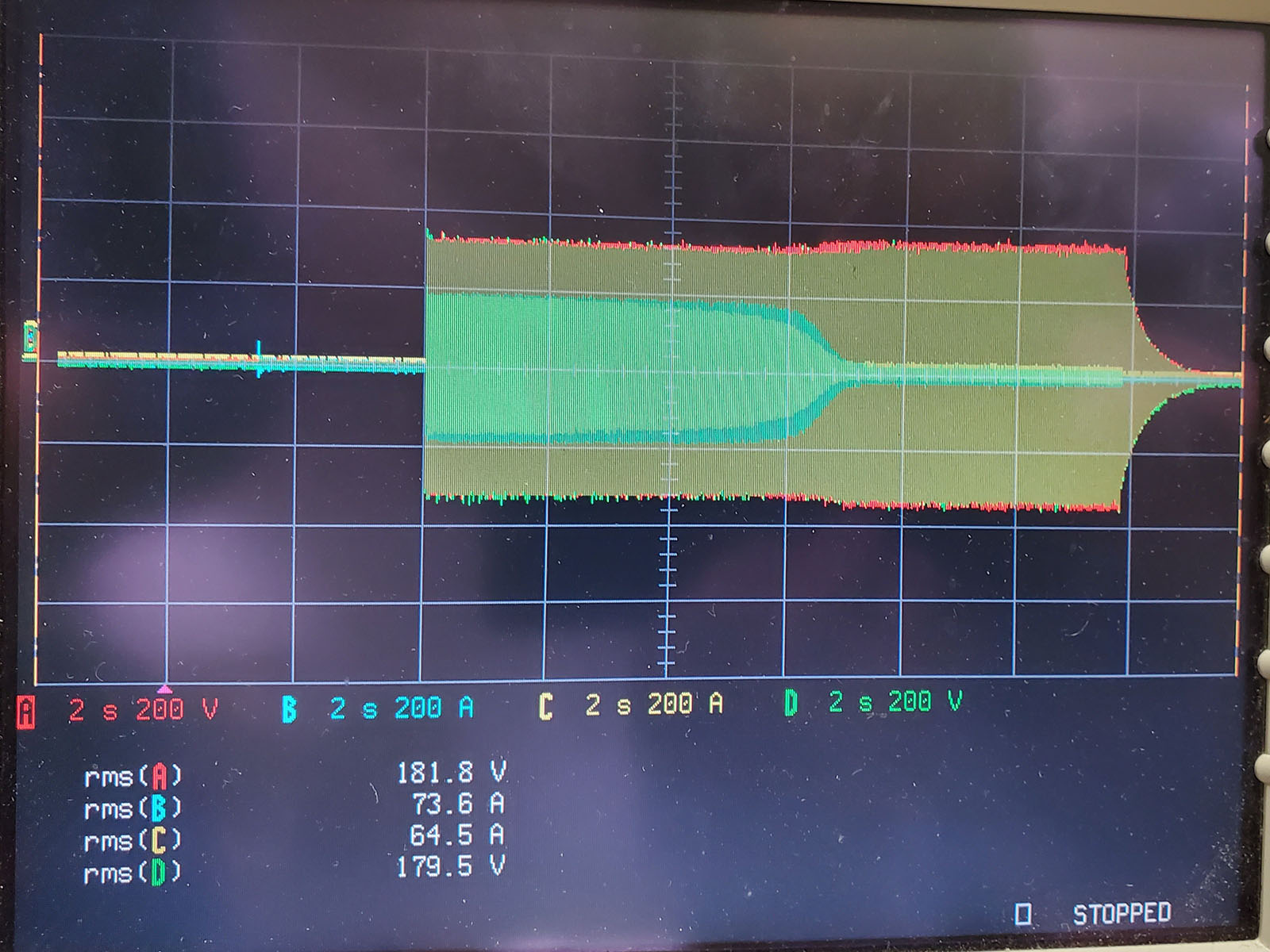
A, B show Volts and Amps for the pass-thru leg, while C, D show Amps and Volts for the generated leg. Pass thru voltage and current and the generated leg are roughly equal.
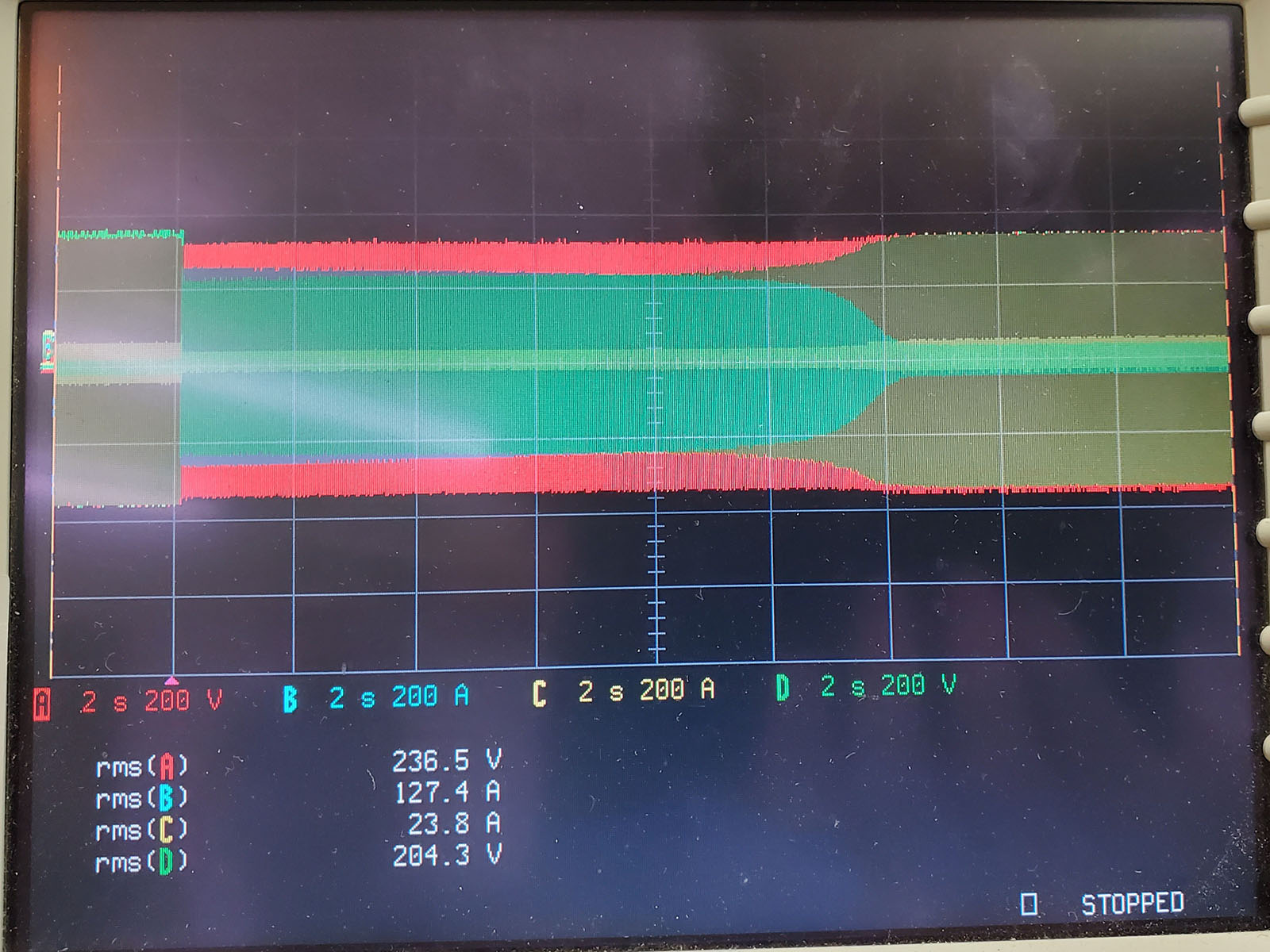
A, B show Volts and Amps for the pass-thru leg, while C, D show Amps and Volts for the generated leg. Pass thru and generated legs show significant imbalance in both voltage and current.
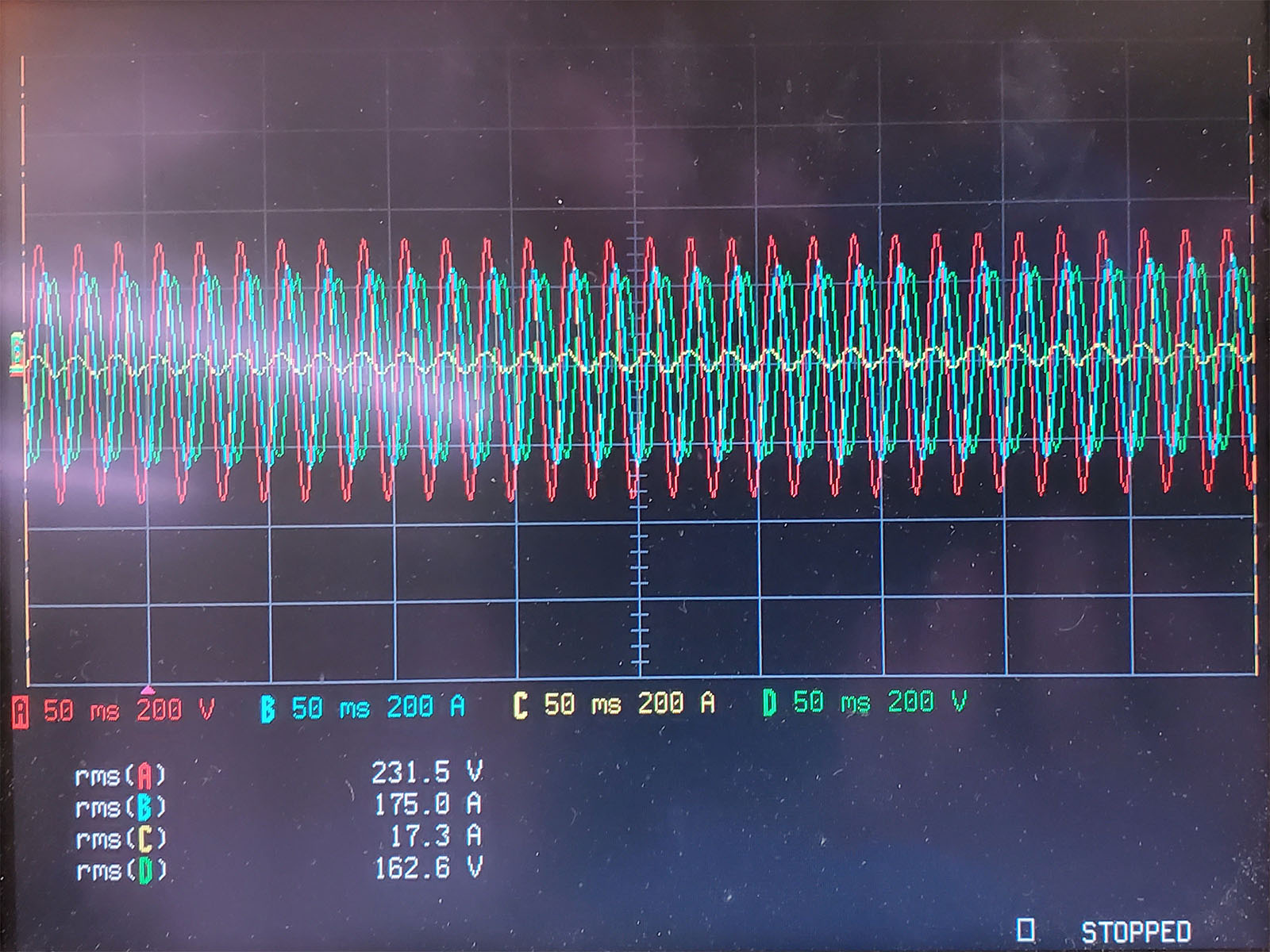
In this detail view of the startup with the rotary phase converter it is obvious why the motor started so much slower. The rotary converter was only able to supply 17 A to the third winding of the motor.
This blower would generally be considered a hard load to start, but more difficult loads exist, including air compressors, submersible pumps, or hydraulic pumps used to drive equipment such as elevators.
Real-World Effects
Increased Current Means a Larger Electrical Capacity Requirement
You need a larger single-phase service for a given load. This can be clearly seen in the test data, as the rotary phase converter caused the load to draw significantly more current during motor start.
Unbalanced Voltage Translates to Lower Motor Efficiency and Less Torque
In this case shown as a much longer time to come up to full speed.
Unbalanced Voltage Creates Heat, Which Reduces Motor Lifespan
Frequent starts and stops would likely result in a significantly shorter service life for this load being started from the rotary converter.
To read a more in-depth analysis of the differences between different phase conversion technologies, read the Phase Conversion Technology whitepaper — Read Whitepaper →
Dig Deeper
These pages contain comparisons of phase conversion technologies, including static, rotary, and digital phase conversion, applied to simple and complex scenarios.
Voltage Balance
Maintaining tight voltage balance significantly alters the performance and longevity of electric motors.
Read More →Definitions
Common terms related to phase conversion technology used throughout this website and across the internet.
Read More →Sizing a Converter
Oversizing, or splitting across multiple units, learn how to best accommodate available incoming power.
Read More →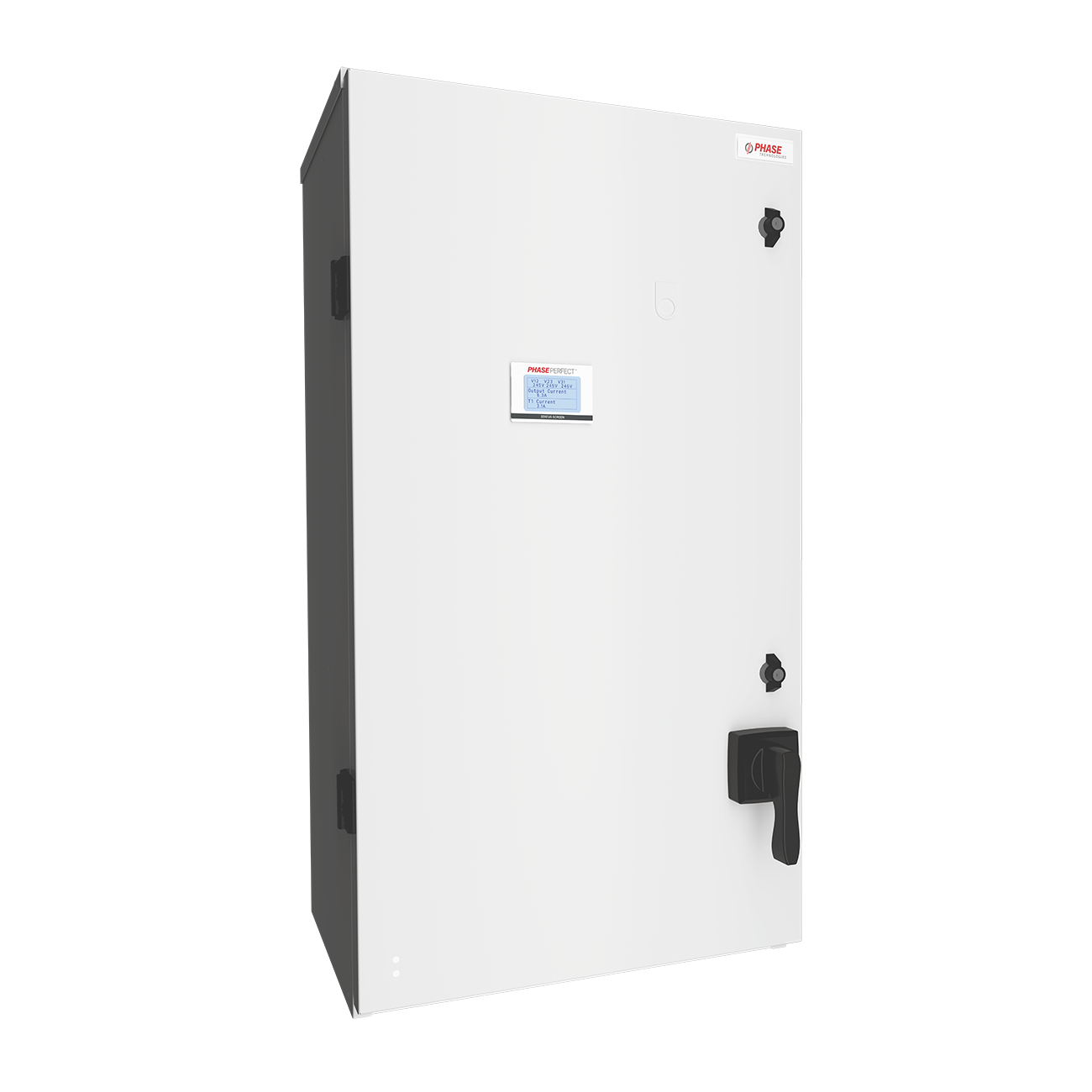
Phase Perfect® Industrial
The Phase Perfect® is also available in a compact, high-value configuration where the customization options of the original are not required. These Enterprise models have the same modern digital phase conversion technology inside as the original.
See the Phase Perfect® Industrial →Phase Perfect® provides uncommon value in Phase Conversion Technology